
Ketamine-Assisted Psychotherapy (KAP): More Than A Medicine Experience
The first questions I’m usually asked about ketamine-assisted psychotherapy (KAP) tend to center on the medicine itself:
- What will I feel?
- Will I lose control?
- Will I remember what happens?
- What if something difficult comes up?
- What if nothing happens at all?
These are understandable questions especially given the range of information, perspectives, and sometimes conflicting narratives about ketamine circulating in the media and public conversation.
But the medicine experience is only one part of KAP.
I think about KAP as a process that unfolds through several interconnected phases: preparation, arrival, the medicine experience, returning, and integration.
I believe there is no "right" way these phases need to unfold for an experience to be meaningful. This perspective is consistent with the evolving research on ketamine-assisted psychotherapy, which has yet to establish one definitive model or approach as the most effective (Veraart et al., 2026).
1. Preparation: Creating the Conditions for Sanctuary
Preparation is an opportunity to explore what helps someone feel supported, what makes it difficult to receive care, and how their nervous system responds to uncertainty.
For someone who has spent years anticipating the needs of others, the idea of setting aside time to turn inward might feel unfamiliar. For someone with a history of trauma, being invited to close their eyes, relax, or surrender control might activate protective responses (Sienkiewicz & Krystal, 2026).
Rather than treating these responses as obstacles to overcome, we can become curious about them:
-
What parts of you are interested in this experience?
-
What parts are hesitant?
-
What might help you feel a little more supported as you approach something unfamiliar?
We might explore the environment, notice where the body feels most settled (even if its just the pinky toe), identify resources, or explore what I call a felt sense of sanctuary.
Sanctuary doesn't necessarily mean feeling completely calm or safe. Sometimes it means finding just enough support to remain connected to ourselves while something uncertain unfolds.
Preparation also involves medical considerations; including screening, informed consent, discussion of risks, and coordination with a qualified ketamine prescriber. Ketamine is not appropriate for everyone, and the therapeutic relationship does not replace medical oversight.
The intention isn't to eliminate uncertainty. It's to create conditions in which uncertainty can be held with support.
2. Arrival: Noticing the Threshold
There is often a moment in KAP when someone begins noticing that something is shifting.
Depending on the dose, route of administration, and individual response, these changes might feel subtle or intense.
Someone might notice a softening of familiar thought patterns, changes in bodily sensation, a sense of distance from everyday concerns, or alterations in how they experience time and space.
Others might feel restless, uncertain, emotional, or surprisingly ordinary.
Ketamine can produce a range of subjective experiences; including changes in perception, dissociation, and altered awareness. These effects vary considerably across individuals and treatment approaches (Dore et al., 2019).
I find this threshold especially interesting from a parts-informed perspective.
A part that usually manages, anticipates, analyzes, or maintains control may become more noticeable as the experience begins to change.
Another part might feel curious or relieved.
And sometimes several parts are present at once.
Rather than assuming that resistance means something is going wrong, we can make room for the possibility that a protective response is doing exactly what it has learned to do.
There is no requirement to push through discomfort or surrender control.
3. The Medicine Experience: Making Room for What Emerges
This is the phase folks tend to imagine when they think about KAP.
At lower doses someone may notice subtle shifts in perspective, emotional access, or body awareness.
At higher doses the experience may become more immersive, with significant changes in perception, imagery, difficulty communicating, or a sense of separation from the body.
Neither a subtle nor an immersive experience is inherently more meaningful.
The appropriate approach depends on the person, their clinical needs, the treatment setting, and the medical and therapeutic plan.
The range of experience always fascinates me when someone's familiar ways of organizing experience begin to shift.
Maybe a critical part becomes less dominant for a little while.
Perhaps grief that has been difficult to approach becomes more accessible.
Sometimes a protective part finally gets enough space to be perceived differently.
And sometimes very little seems to happen.
The depth of a therapeutic experience cannot be measured by how dramatic, emotional, or extraordinary it feels.
This is where our role as therapists might feel different than in an "ordinary" therapy session.
We don't need to interpret every image, assign meaning to every sensation, or turn every moment into an insight.
We can remain curious without directing the experience.
In Brainspotting, we often speak about following the client's process rather than leading it.
That orientation feels particularly relevant here.
The medicine may alter the conditions of awareness, but the person's autonomy, pacing, and relationship to their own experience remain central.
4. Returning: The Transition Back to "Ordinary" Awareness
As the acute effects of ketamine begin to diminish, another important phase unfolds.
Someone might want to talk immediately, or they might prefer quiet.
There can be a temptation to make meaning quickly:
- What did that image represent?
- Why did that memory come up?
- Was that experience significant?
- What does it mean for my healing?
But returning from a non-ordinary state doesn't necessarily mean someone is ready to explain what happened.
Sometimes the most supportive thing we can do is allow the experience to settle.
A snack, a familiar voice, or simply time to orient to the room may be more useful than an immediate conversation about insights.
This is another place where the concept of sanctuary becomes relevant.
Can the environment support a gradual return?
Can someone remain connected to their own pace?
Can we resist the pressure to turn an experience into a lesson before it has had time to settle?
5. Integration: Bringing the Experience Into Relationship With Everyday Life
Although integration is often discussed as something that happens after a medicine session, I think of it as a process that begins during preparation and continues well beyond the medicine experience.
Integration is an ongoing process of exploring how an experience relates to the life someone is living.
A person might leave a session with a new sense of compassion for a younger part of themselves.
They might recognize how much energy goes into staying in control.
They might feel connected to grief, anger, longing, or a capacity for rest that has been difficult to access.
But noticing something is not the same as being able to live differently.
This is where ongoing support can become especially valuable.
Research has been examining whether psychotherapy can help sustain improvements following ketamine treatment. For example, Wilkinson et al. (2017) explored cognitive behavioral therapy alongside intravenous ketamine for treatment-resistant depression and found preliminary evidence that psychotherapy might help extend antidepressant benefits. The study was small and uncontrolled, so its findings should be understood as exploratory rather than definitive.
A broad review of KAP research identified promising findings while emphasizing the need for more rigorous studies to understand how psychotherapy and ketamine might work together (Drozdz et al., 2022).
Integration may involve exploring how a new perspective shows up in relationships, how familiar protective patterns return, or what happens when someone tries to make a small change.
We might also discover that the experience felt confusing, disappointing, or difficult to understand.
Integration needs to make room for those possibilities, too.
Not every experience produces a breakthrough.
Not every insight becomes a lasting change.
And not every challenging experience needs to be reframed as a hidden gift.
Sometimes integration means recognizing that something was difficult and receiving support in understanding its impact.
A Different Way of Approaching KAP: Low + Slow
At lower doses some folks may be able to remain verbally engaged, track bodily sensations, notice parts as they emerge, and explore their experiences in real time.
Rather than pursuing an increasingly intense experience, we can remain interested in what is already happening:
- What becomes noticeable when we slow down?
- What happens when we don't need to reach for the next insight?
- What support does a protective part need before something unfamiliar can be approached?
Lower-dose work is not automatically gentler or safer for every person, and it is not necessarily the best fit for every therapeutic goal.
I believe that this is an important area for continued clinical exploration especially for those whose experiences have taught them that slowing down, receiving support, or releasing responsibility can feel threatening rather than restorative.
It can also be a less intimidating introduction to KAP, and more accessible for folks who do not have the amount of time and space recommended after a high-dose ketamine experience (i.e. parents with young children).
More Than a Journey
Ketamine-assisted psychotherapy is sometimes described in terms of the extraordinary experiences it can produce.
I am equally interested in the "ordinary" moments surrounding them:
The moment someone notices that a protective part is not actually who they "really" are.
The moment they recognize a need they have been overlooking.
The moment they discover that they can ask for something different.
The moment they return to everyday life and begin experimenting with a new way of relating to themselves.
KAP is so much more than what happens under the influence of ketamine.
It is about the conditions we create before, during, and after the medicine experience.
For me that means approaching the work with curiosity, humility, attention to the nervous system, respect for protective parts, and a willingness to move slowly.
References
Dore, J., Turnipseed, B., Dwyer, S., Turnipseed, A., Andries, J., Ascani, G., Monnette, C., Huidekoper, A., Strauss, N., & Wolfson, P. (2019). Ketamine assisted psychotherapy (KAP): Patient demographics, clinical data and outcomes in three large practices administering ketamine with psychotherapy. Journal of Psychoactive Drugs, 51(2), 189–198.
Drozdz, S. J., Goel, A., McGarr, M. W., Katz, J., Ritvo, P., Mattina, G. F., Bhat, V., Diep, C., & Ladha, K. S. (2022). Ketamine assisted psychotherapy: A systematic narrative review of the literature. Journal of Pain Research, 15, 1691–1706.
Sienkiewicz, M. A., & Krystal, J. H. (2026). The clinical container: Preparation, somatic hyperarousal, and therapeutic alliance in ketamine-assisted psychotherapy. American Journal of Psychotherapy, 80(1), 34–45.
Veraart, J. K. E., de Boer, M. J., Schoevers, R. A., & Touw, D. J. (2026). Ketamine-assisted psychotherapies for mental disorders: A historical overview and systematic review. Journal of Affective Disorders, 395, 112–125.
Wilkinson, S. T., Wright, D., Fasula, M. K., Fenton, L., Griepp, M., Ostroff, R. B., & Sanacora, G. (2017). Cognitive behavior therapy may sustain antidepressant effects of intravenous ketamine in treatment-resistant depression. Psychotherapy and Psychosomatics, 86(3), 162–167.
About the Author
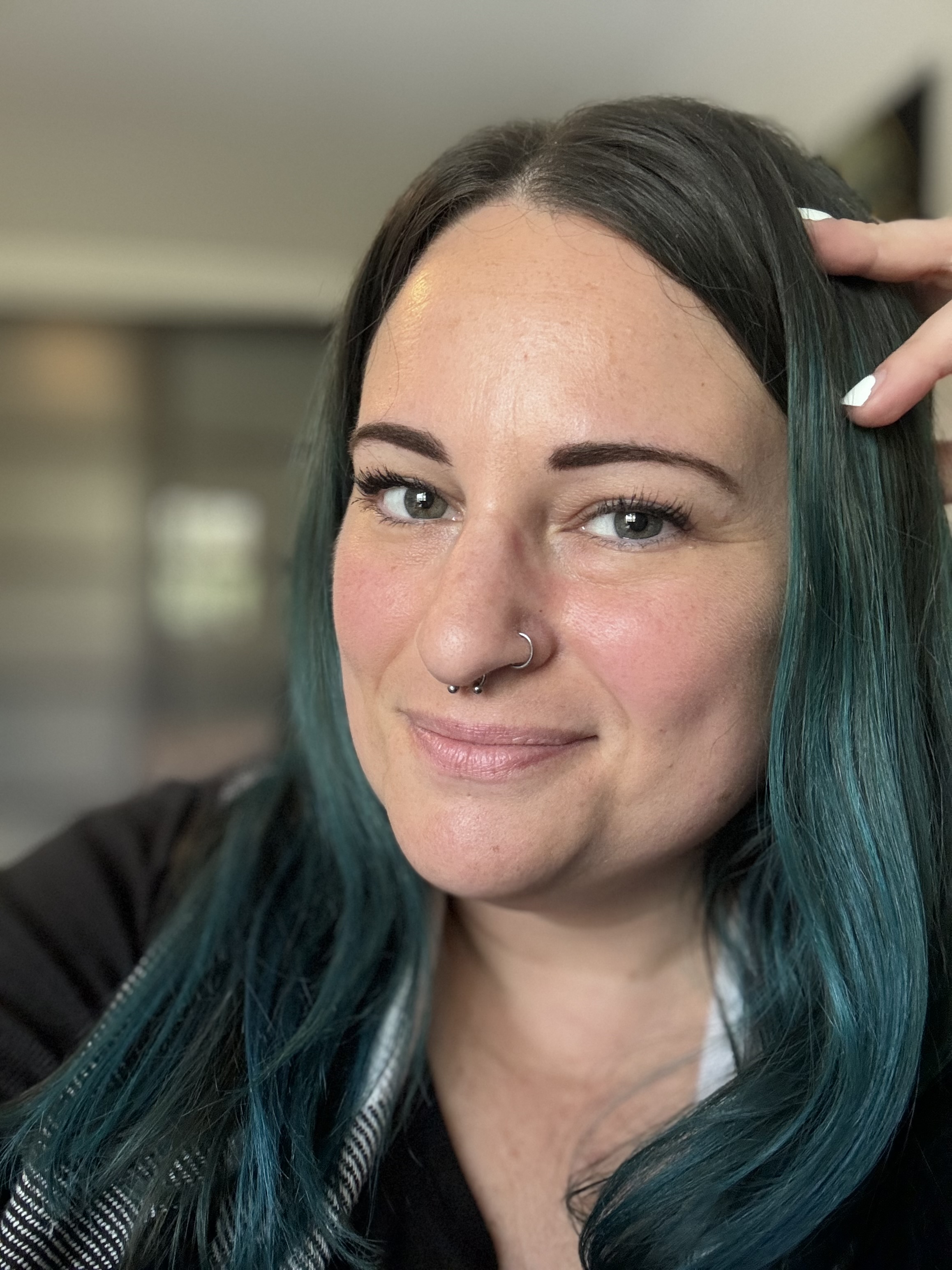
Meredith Futernick-Gerak (she/hers), LPC, is a Certified Psychedelic Assisted Psychotherapist, Approved Brainspotting Consultant, and Clinician Educator. Her work integrates brain-body therapies, parts work, and ketamine-assisted psychotherapy, with an emphasis on non-pathologizing and trauma-sensitive approaches.
Through Integrative Journey Modern Psychotherapy Co. and Integrative Journey Modern Learning; Meredith offers psychotherapy, consultation, and experiential professional education.
Disclaimer: This article is intended for educational purposes and does not constitute medical advice. Ketamine treatment requires appropriate medical evaluation, prescribing, monitoring, and follow-up. The psychotherapy-integrated approaches described here are evolving clinical practices, and their evidence base remains limited. Ketamine used for psychiatric indications other than those specifically FDA-approved is prescribed off-label.
Brought to you by